
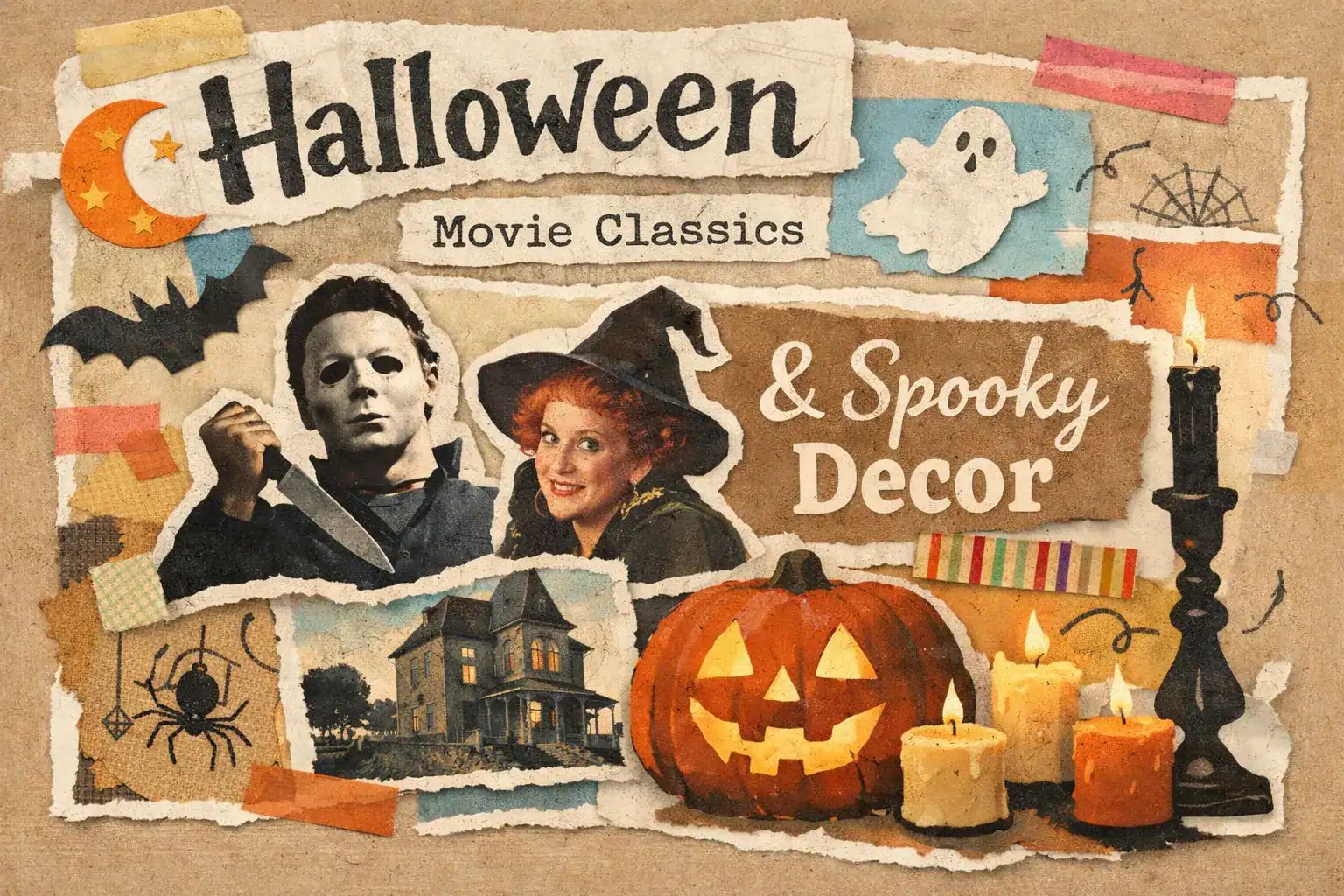
Classic Halloween movies condense autumn nostalgia, jump scares, and ritual viewing into a dependable watchlist. This article presents 12 timeless picks paired with achievable décor ideas so you can match mood to mise-en-scène whether you’re hosting kids, teens, or an adults-only fright night. Each entry includes streaming notes, age guidance, and practical styling tips from The Dark Threshold to help you set the scene before the first trick-or-treater arrives.
We start with family-friendly staples like It’s the Great Pumpkin, Charlie Brown and Hocus Pocus, then move through whimsy and dark comedy, Universal-era monsters, foundational modern horror, slow-burn dread, and cult midnight features so every kind of fan finds something on the list. Every title includes a short why-it-works note plus a ready-made décor pairing from The Dark Threshold that favors atmosphere over gimmicks. Read on to build a watchlist and a look that feels lived-in and eerie rather than overproduced.
Quick summary
Short on time? Use this quick guide to build a watchlist and a minimal set of décor swaps that scale from porch lighting to an immersive living-room screening. These simple rules keep the mood cohesive without a lot of fuss.
- Pick by mood. Match titles to your audience and hour, using family-friendly picks for early evenings and slow-burn or cult films for late-night viewers.
- Match the décor. Use one curated pairing per film, such as a poster, an amber bulb, or a tactile prop, to suggest atmosphere without overwhelming the room.
- Start small. Stage a single focal detail, then swap bulbs or add a weathered candle to transform the space quickly and affordably.
- Sequence thoughtfully. Arrange the playlist from light to dark: whimsy, dark comedy, vintage dread, modern foundations, psychological horror, then cult midnight.
- Practical notes. Confirm streaming availability and age ratings ahead of time, and rehearse basic lighting and sound so the mood lands when you press play.
Classic Halloween movies to set the mood
Begin with films that welcome trick-or-treaters without spiking heart rates. These two picks favor atmosphere, shared ritual, and nostalgia rather than gore, so they work when your crowd includes children and nostalgic adults.
It’s the Great Pumpkin, Charlie Brown (1966) runs about 25 minutes and remains a seasonal ritual for many households. Its strength is in tactile moments: pumpkin patches, earnest belief, and small autumn disappointments that feel like the season itself. Availability varies, so check network archives or rental collections before you plan the night. Pair with soft string lights, hand-painted ceramic pumpkins, and a faux corn-stalk bundle from The Dark Threshold’s family collection to link porch and living-room styling.
Hocus Pocus (1993) runs about 96 minutes and balances camp with charm, making it ideal for tweens and older viewers. It works as a communal singalong and party backbone because it leans on laugh-out-loud moments and cozy witchy style over true scares. Availability rotates with studio bundles, so have a rental fallback. Pair with rustic broom props, vintage apothecary jars, and flickering amber lanterns from The Dark Threshold to give the room a witchy, lived-in feel when you want the night to feel like an event.
Whimsy and dark comedy
Pick one or two titles that let guests play with costume and commentary. These films trade full fear for macabre wit and strong visual cues that inspire decorations and dress-up.
The Nightmare Before Christmas (1993) is a 76-minute stop-motion film directed by Henry Selick and produced by Tim Burton. It blends Halloween iconography with a holiday twist and suits viewers who prefer artful oddities to outright terror. For décor, echo the film’s textures with black-and-white stripes, skeletal string lights, and paper-cut silhouettes from The Dark Threshold to create a tactile, whimsical mood.
Beetlejuice (1988) runs about 92 minutes and leans darker while staying cheeky, which makes it a hit with teens and adults. Tim Burton’s set-driven visual flair turns it into a high-energy party choice and a great option for costume contests. Recreate the film’s off-kilter energy with retro neon signage, warped picture frames, and macabre topiary from The Dark Threshold to push the surreal tone.
Use these two films as complementary anchors: one supplies approachable oddball charm, the other anarchic costume energy. After a dose of whimsy, shift into titles that trade humor for sustained dread when your crowd is ready to settle in.
Universal monsters and vintage dread
Go back to black-and-white horror to evoke the genre’s early textures. Universal-era pictures favor shadow, heavy fabrics, and low lighting, which translate easily into vintage décor and costume choices.
Dracula (1931), directed by Tod Browning, runs about 85 minutes and introduced Bela Lugosi’s velvet-cloaked count. The film helped launch the sound-era horror boom and set the posture and cadence many later vampires adopted. Pair with velvet candelabra, aged portrait prints, and heavy drapery from The Dark Threshold to recreate a 1930s parlor.
Frankenstein (1931), directed by James Whale, runs about 71 minutes and made Boris Karloff the face of cinematic monstrosity. The film balances spectacle and sorrow, showing the monster as both threat and tragic figure. Stage a lab-to-grave vignette with vintage lab glassware, patina metal accents, and mossy gravestone props from The Dark Threshold.
These two titles set a straightforward template for mood and set dressing. They prepare the room for later films that shifted fear toward modern concerns.
Classic Halloween movies: foundational modern horror
Modern horror pulled scares into ordinary spaces and started using editing, point of view, and social commentary as tools of dread. The films below changed how audiences experience fear and remain essential viewing for serious fans.
Psycho (1960) runs about 109 minutes and reshaped narrative surprise and editing through Hitchcock’s precise camera work. Its psychological shocks rely on mise-en-scène rather than explicit effects, which suits viewers who value craft as much as fright. Pair with a faded motel sign, a dim bedside lamp, and a battered key rack from The Dark Threshold to suggest a roadside, uncanny setting.
Night of the Living Dead (1968) runs about 96 minutes and rewired genre expectations with an independent approach, social subtext, and relentless atmosphere. George A. Romero’s film foregrounds isolation and communal breakdown, so it works best in a half-dark room with immersive sound. Pair with stacked wooden crates, boarded-window props, and a single flickering lantern from The Dark Threshold to recreate a besieged farmhouse tableau.
These foundational titles bridge earlier Universal dread and later psychological experiments, showing how technique and point of view became tools of fear.
Slow-burn dread and psychological horror
Choose slow-burn masterpieces when you want lingering unease instead of jump scares. These films reward patience, so match them with controlled, mood-driven décor that tightens around the story rather than distracts from it.
The Exorcist (1973) runs about 122 minutes and is a landmark of religious and psychological terror. Its power comes from ritualized, bodily horror and a steady escalation that rewards patience, so recommend it for adults only and include clear content warnings. Look for major platform listings or rentals and set expectations for viewers before the screening.
The Shining (1980) runs about 146 minutes and makes architecture and silence act as instruments of dread, with corridors and framing that heighten unease. Kubrick’s visual precision suits viewers who prefer slow dread grounded in mise-en-scène and psychological unraveling. Suggest patterned runner rugs, a vintage typewriter prop, and cool red uplighting from The Dark Threshold to echo the Overlook’s uncanny geometry.
Staging slow-burn horror is mostly about restraint and sensory control. Keep soundscapes minimal and let a single recurring prop anchor the room. Consider these practical staging tips:
- Use directional, low-intensity lighting to reveal without explaining.
- Introduce textures that invite touch, such as frayed upholstery, aged paper, and cool metal.
- Designate a quiet zone where viewers can absorb pauses without distraction.
Cult midnight and creature features
Reserve these films for a later slot or build an entire midnight program around them. Cult classics reward audiences who want to participate, shout lines, and celebrate practical effects. They work best when the room is half-dark and the sound is immersive.
The Thing (1982) runs about 109 minutes and is the textbook polar-set creature feature, built on isolation, paranoia, and practical special effects. Its grotesque transformations and escalating suspicion land hardest in the small hours. Pair with faux-ice crates, cold-hued lanterns, and hidden animatronic accents from The Dark Threshold to sell the polar research-station tableau.
Rocky Horror Picture Show (1975) clocks in around 100 minutes and functions as living theater more than a passive film. Cue props, hand out cue-sheets, and stage a corner for singalongs so your crowd becomes the cast. Pair with red-lip marquees, feather boas, and vintage microphone stands from The Dark Threshold to create a singalong-ready corner.
Your classic Halloween movies playlist
These classic Halloween movies set the tone without demanding a full production. Start with gentle entry points when the porch lights go down, add dark comedy for levity, and let vintage dread anchor the late hours.
Try this simple exercise tonight: pick one film from the list and hang a vintage poster, swap to warm amber bulbs, and add a tactile detail such as a bowl of wrapped candy or a weathered candle. Run a single screening and notice how small changes shift the room’s mood. If you want step-by-step décor ideas and playlist sequencing, The Dark Threshold has guides and templates to help you build the rest. Choose the title, set the scene, and invite one friend to test the threshold with you tonight.
Leave a Reply